
PEMF Coil Technology Explained: How to Choose the Best PEMF Mat
Introduction
When people compare PEMF machines, they often focus on features such as frequencies, intensity, programs or price. While these specifications are important, there is another engineering feature that receives far less attention but may have a significant influence on how a PEMF system delivers its magnetic field—the coil technology inside the applicator.
Not all PEMF mats are built the same.
From the outside, many products appear similar. They may all look like a comfortable treatment mat, but hidden beneath the fabric can be completely different engineering approaches. Some systems use large flexible copper coils covering most of the treatment area, while others may use small circular coils or individual ferrite rods positioned underneath the mat.
Understanding these differences can help consumers ask better questions before investing in a PEMF machine.
Watch Coil Review Video
In this article we’ll look at several different approaches to PEMF coil design, explain why engineering matters, and show why the internal construction of a PEMF system is worth understanding before making a purchasing decision.
Why Coil Design Matters
The purpose of a PEMF machine is to generate pulsed magnetic fields.
Those magnetic fields are produced by electrical current flowing through coils. Although that sounds simple, the design of those coils can vary enormously between manufacturers.
Factors that engineers consider include:
- Coil size
- Coil spacing
- Number of coils
- Copper content
- Coil geometry
- Flexibility
- Treatment coverage
- Magnetic field distribution
These design decisions influence how a PEMF mat is constructed and how the magnetic field is delivered across the applicator.
For this reason, coil technology deserves just as much attention as the frequency settings displayed on the controller.
Looking Inside a Modern PEMF Mat
One of the advantages of filming inside a PEMF mat is that it allows people to see something they rarely get the opportunity to examine.
Most manufacturers never show the inside of their products.
By opening the applicator, viewers can understand the engineering rather than simply relying on marketing claims.
In our demonstration video, you’ll see the construction of the PEMF.inc whole-body mat.
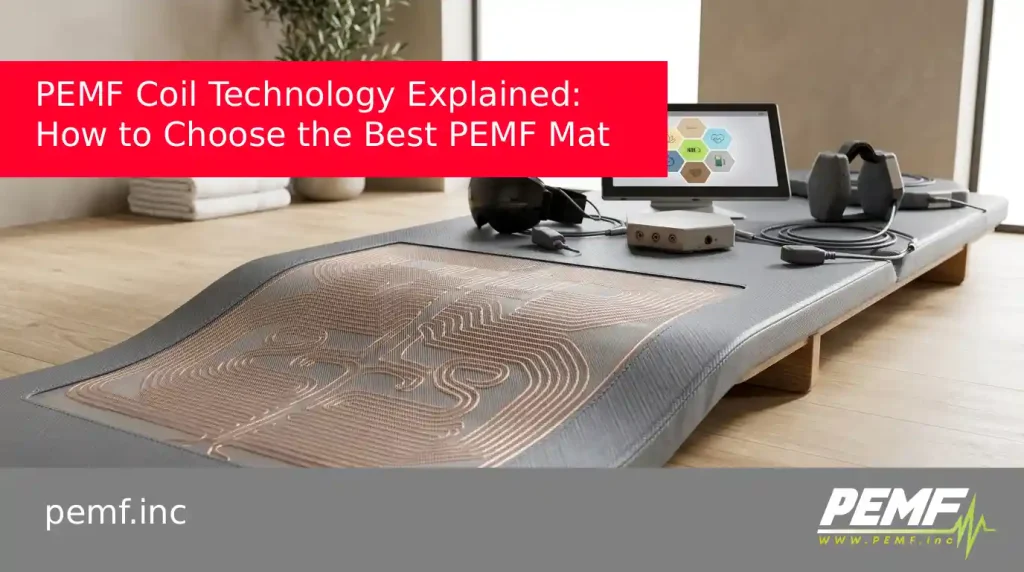
Instead of using a handful of isolated components, the mat contains eight large embroidered copper fibre coils integrated throughout the treatment surface.
Unlike traditional rigid copper windings, these embroidered coils are woven directly into the flexible fabric of the applicator.
This engineering approach provides several practical advantages.
Embroidered Copper Coil Technology
Traditional copper wire coils have been used in PEMF systems for many years.
More recent developments have introduced embroidered conductive fibre technology, allowing copper conductors to become part of the applicator itself.
Rather than creating thick rigid windings, the conductive fibres are embroidered into the mat using specialised manufacturing techniques.
The result is a coil system that remains highly flexible while maintaining extensive coverage across the applicator.
When the mat bends around a chair, lounge or bed, the applicators remain comfortable to use without the bulky feeling often associated with older-style rigid coils.
For everyday users, flexibility isn’t simply about comfort.
It allows the same PEMF mat to be used on:
- A lounge
- A recliner
- A bed
- A chair
- A car seat
- While relaxing or reading
Instead of designing your lifestyle around the machine, the applicator adapts to where you want to use it.
Treatment Area Matters
One important engineering consideration is the overall treatment area.
When looking inside the PEMF.inc whole-body mat, it’s easy to see that the embroidered coils extend across much of the applicator.
This creates broad magnetic field coverage throughout the mat.
Many consumers never think to ask:
“How much of the mat is actually producing the magnetic field?”
It’s a reasonable question because not every square centimetre inside every PEMF mat necessarily contains an active coil.
Understanding where the coils are positioned helps people appreciate how different engineering designs approach treatment coverage.
Rather than focusing only on the outside appearance of a mat, it’s worth understanding what is happening beneath the fabric.
Comparing Different Coil Designs
During our demonstration, we also looked at several alternative coil designs used in different wellness products.
One example showed a very small circular wire coil.
Another used a thin transparent flexible component.
A third design incorporated several ferrite rod assemblies positioned underneath a gemstone mat.
These examples illustrate that manufacturers can take very different engineering approaches to generating magnetic fields.
Each design represents a different philosophy of construction.
Rather than assuming every PEMF machine is built the same, consumers should understand that the internal engineering can vary considerably between products.
This is one reason independent demonstrations can be valuable.
They allow people to see the internal components instead of relying solely on advertising photographs or brochures.
Eight Large Flexible Coils
The PEMF.inc whole-body mat uses eight embroidered copper fibre coils distributed across the applicator.
Instead of concentrating magnetic field generation into only a few isolated positions, the coil layout is designed to provide extensive coverage across the body mat.
The flexible construction also means the applicator remains comfortable while maintaining its shape over repeated use.
This combination of flexibility and broad coverage represents one example of how engineering decisions influence the final product.
When comparing PEMF machines, it’s worth asking not only how many programs a device offers, but also how the magnetic field is actually being generated.
The answer begins with the coil technology hidden inside the applicator.
Ferrite Rod Designs and Alternative Engineering Approaches
As you continue watching the video, you’ll also see another style of construction commonly found in some wellness mats. Instead of using large embroidered coils distributed across the treatment surface, these systems use ferrite rods positioned inside the applicator.
Ferrite rods are magnetic core materials that can be incorporated into electromagnetic devices in different ways depending on the manufacturer’s design. In the demonstration, you can clearly see that the ferrite rods occupy only specific locations within the mat, with open space between them.
This highlights an important point for consumers.
Different manufacturers solve the engineering challenge in different ways.
Some use broad flexible coil layouts.
Some use individual circular coils.
Some use ferrite rod assemblies.
The important question is not which technology sounds the most impressive in marketing material, but rather:
How is the magnetic field being generated, and how much of the applicator is actively producing that field?
Understanding the engineering allows consumers to make more informed comparisons.
Independent Testing Can Help Answer Questions
One advantage of independent demonstrations is that they allow people to see products beyond the sales brochure.
Instead of relying only on promotional photographs, you can examine:
- Internal construction
- Coil placement
- Coil size
- Treatment coverage
- Applicator flexibility
- Overall engineering design
In our own demonstrations, we also measured the magnetic field produced by several different products using magnetic field measuring equipment. Those demonstrations represent our own observations under our testing conditions and are intended to help viewers understand how different designs behave rather than make universal claims about every product.
Engineering transparency helps consumers ask better questions before making a purchase.
Questions Every Buyer Should Ask Before Purchasing a PEMF Machine
Whether you’re looking at an entry-level PEMF mat or a premium whole-body PEMF system, asking the right questions can make a significant difference.
Consider asking:
- What type of coils are used?
- How many coils are inside the applicator?
- How much of the treatment area is covered by active coils?
- Is the applicator flexible?
- Can the mat be comfortably used on a bed, lounge or chair?
- Is the magnetic field independently measurable?
- Does the manufacturer openly show the internal construction?
- Is the engineering explained, or only the marketing?
These questions encourage meaningful comparisons based on design and construction rather than advertising alone.
Why Flexibility Makes Everyday Use Easier
Performance is only one part of the user experience.
A whole-body PEMF mat should also be practical to use.
The embroidered coil technology shown in our video allows the applicator to bend naturally around everyday furniture.
This means the same PEMF mat can be comfortably used on:
- A lounge while relaxing
- A bed before sleep
- A recliner while reading
- A chair while working
- A car seat while travelling (where appropriate and safely)
Instead of storing a rigid applicator in a cupboard, a flexible PEMF mat is designed to fit naturally into everyday life.
For many people, convenience encourages regular use.
Engineering Should Be Transparent
One of the goals of this video is education.
Consumers deserve the opportunity to understand what they’re purchasing.
Unfortunately, many wellness products never reveal their internal construction.
That’s why independent educational videos can be so valuable.
When manufacturers openly explain their engineering and show what’s inside their applicators, consumers gain confidence that they’re making an informed decision.
Rather than focusing solely on claims, transparency allows people to evaluate the actual design.
PEMF Coil Technology Is About More Than Appearance
Looking at a PEMF mat from the outside tells you very little about what’s happening beneath the surface.
Two applicators may look almost identical externally while using completely different internal engineering.
Coil layout, treatment coverage, flexibility, copper content and overall construction all contribute to how a system is designed.
Understanding these engineering principles helps move the conversation beyond marketing and toward informed decision-making.
As shown throughout our demonstration video, taking the time to examine what’s inside a PEMF applicator provides valuable insight into the engineering choices made by different manufacturers.
Frequently Asked Questions
What is a PEMF coil?
A PEMF coil is the component that generates a pulsed magnetic field when electrical current passes through it. Different manufacturers use different coil designs depending on their engineering approach.
Why is coil technology important?
Coil technology influences the design of the applicator, treatment coverage, flexibility and the overall engineering of the PEMF system.
Are all PEMF mats built the same?
No. Different manufacturers use different internal designs, including embroidered copper coils, circular coils and ferrite rod assemblies.
What should I look for when comparing PEMF machines?
Consider the engineering, coil layout, treatment area, flexibility, transparency, build quality and whether the manufacturer explains how the magnetic field is generated.
Why does flexibility matter?
A flexible applicator can be used comfortably on a bed, lounge, chair or other everyday furniture, making the system easier to incorporate into daily life.
Final Thoughts
Choosing a PEMF machine involves much more than comparing price tags or scrolling through feature lists.
The engineering hidden inside the applicator deserves careful attention.
By understanding coil technology, treatment coverage and overall construction, consumers can ask better questions and make more informed decisions.
Our goal at PEMF.inc is to educate people about the engineering behind pulsed electromagnetic field systems through independent demonstrations, practical testing and clear explanations.
Whether you’re researching your first PEMF mat or comparing different technologies, understanding how the applicator is built is an important step toward making an informed choice.
Learn More
Explore more educational resources on PEMF technology at:
You can also watch more independent engineering demonstrations, comparison videos and educational articles covering PEMF systems, magnetic field testing, coil technology and whole-body PEMF on our website.